The Practice Of Being Where You Are
Being present sounds simple. Almost obvious. And yet, for many people, it is one of the most elusive states to sustain.
Presence is not rare because it is difficult to understand. It is rare because it runs counter to how modern life trains attention. From an early age, we learn to anticipate, to prepare, to stay ahead of what is happening. The mind becomes oriented toward what is next, while the body remains where it already is.
This split becomes so familiar that it feels normal.
You might notice it while walking — the body moving, the mind elsewhere. Or during conversation, already forming the next response instead of hearing what is being said. Even during rest, attention often drifts toward planning, reviewing, or improving the moment rather than inhabiting it.
Presence asks for something quieter.
To be present is not to stop thinking, but to stop leaving. It is the willingness to remain with experience as it unfolds, without immediately narrating, evaluating, or redirecting it. Sensation before interpretation. Awareness before reaction.
This can feel surprisingly vulnerable. Without projection into the future or retreat into the past, there is nowhere to hide. The present moment contains whatever is actually here — comfort or discomfort, ease or restlessness. Many people unconsciously avoid presence not because it is empty, but because it is honest.
Yet honesty is what makes presence restorative.
When attention stays with the body, the nervous system receives consistent information. Breath is felt. Tension is noticed before it accumulates. Fatigue registers before it becomes exhaustion. Presence allows regulation to happen in real time rather than through correction later.
This is why being present often brings a sense of relief. Not because circumstances change, but because internal friction decreases. You are no longer managing experience from a distance. You are participating in it directly.
Nature supports this state without instruction.
In natural settings, there is little to interpret and nothing to optimize. Sounds arrive and fade. Light shifts gradually. The environment does not demand narrative. Attention naturally settles into perception rather than analysis. Presence becomes the default rather than the goal.
Silence works similarly. When auditory input decreases, mental chatter becomes more noticeable — and then, if allowed, less dominant. Without constant stimulation, awareness learns how to rest on its own.
Presence, over time, becomes familiar.
It stops feeling like something you do and begins to feel like a way you are. You notice when attention drifts and returns without judgment. You feel moments complete themselves. Time regains texture.
This doesn’t remove challenge from life. It changes your relationship to it. Difficulty is met as sensation rather than story. Ease is felt fully rather than rushed through. Experience regains depth.
Being present is not about perfect attention. It is about gentle return. Again and again. To breath. To sensation. To what is already here.
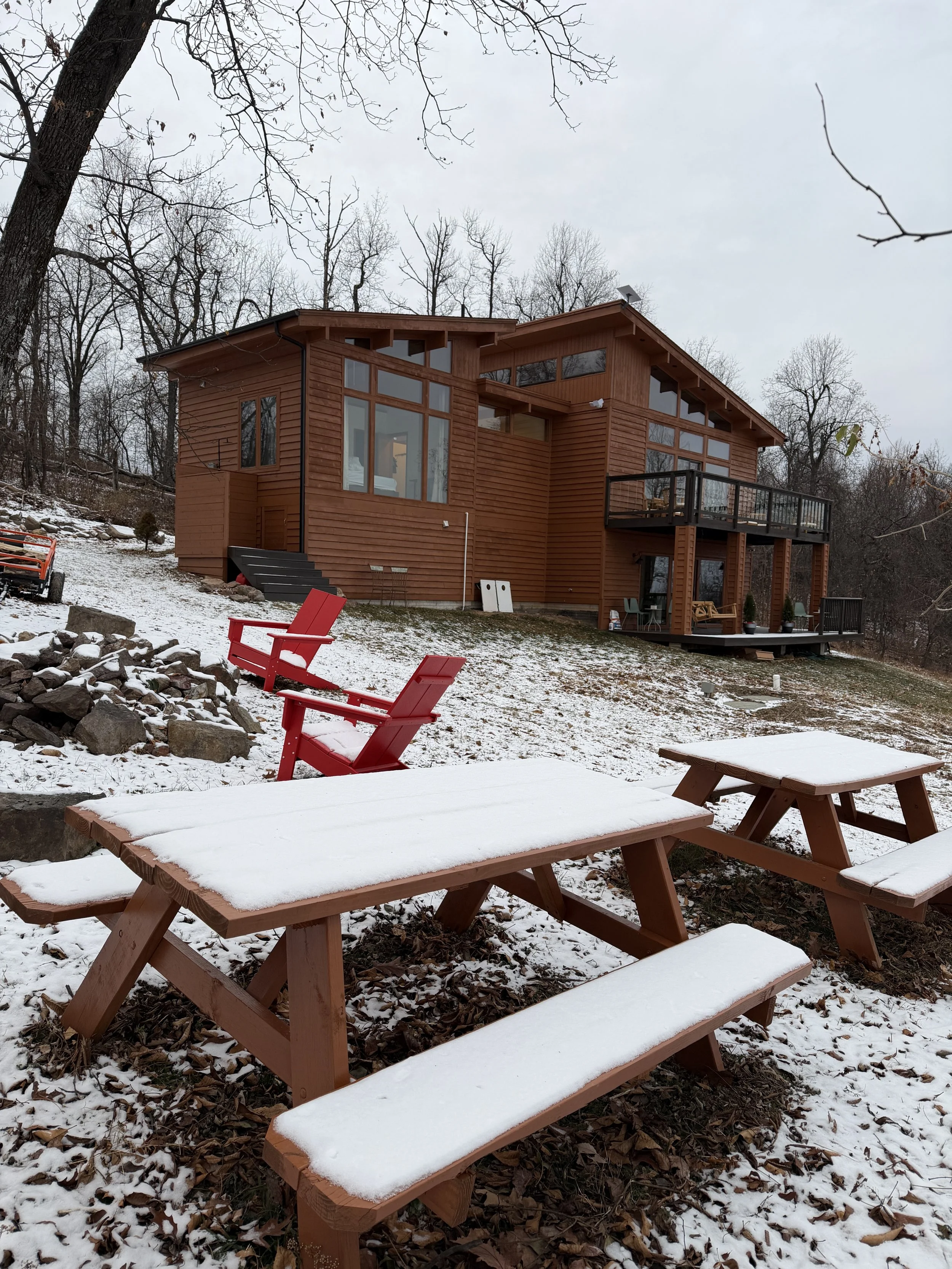
For those who feel drawn to environments that make this return easier — places shaped by quiet, landscape, and unstructured time — you can explore the mountain setting here.
Nothing to master. Just the moment, as it is.
